Personal Injury Lawyer SEO: Why Link Building Is the Deciding Factor
In a market as competitive as personal injury, your backlink profile is often the deciding factor between ranking on page one and ranking on page two. That’s not marketing copy — it’s a direct assessment from current 2026 legal SEO analysis, and it points at something worth understanding clearly: personal injury lawyer SEO involves dozens of ranking factors, but backlinks are consistently identified as the one most likely to separate a firm stuck on page two from one converting on page one.
This guide covers exactly where link building fits within the broader personal injury SEO picture, the specific authority threshold worth targeting, and why “just buy some links” remains exactly the wrong instinct even as the underlying principle — links matter enormously here — is correct.
Why Personal Injury SEO Treats Backlinks Differently Than Other Ranking Factors
Personal injury sits among the most competitive and lucrative SEO niches in existence, with Google Ads CPCs for personal injury keywords regularly exceeding $150 to $300 per click in major markets. This intensity of competition changes how much weight backlinks carry relative to other ranking factors. On-page content, technical performance, and local signals remain necessary, but in a market this saturated, they function more as table stakes — the baseline every serious competitor already has in place — while genuine backlink authority increasingly becomes the actual differentiator between firms clustered at similar content quality levels.
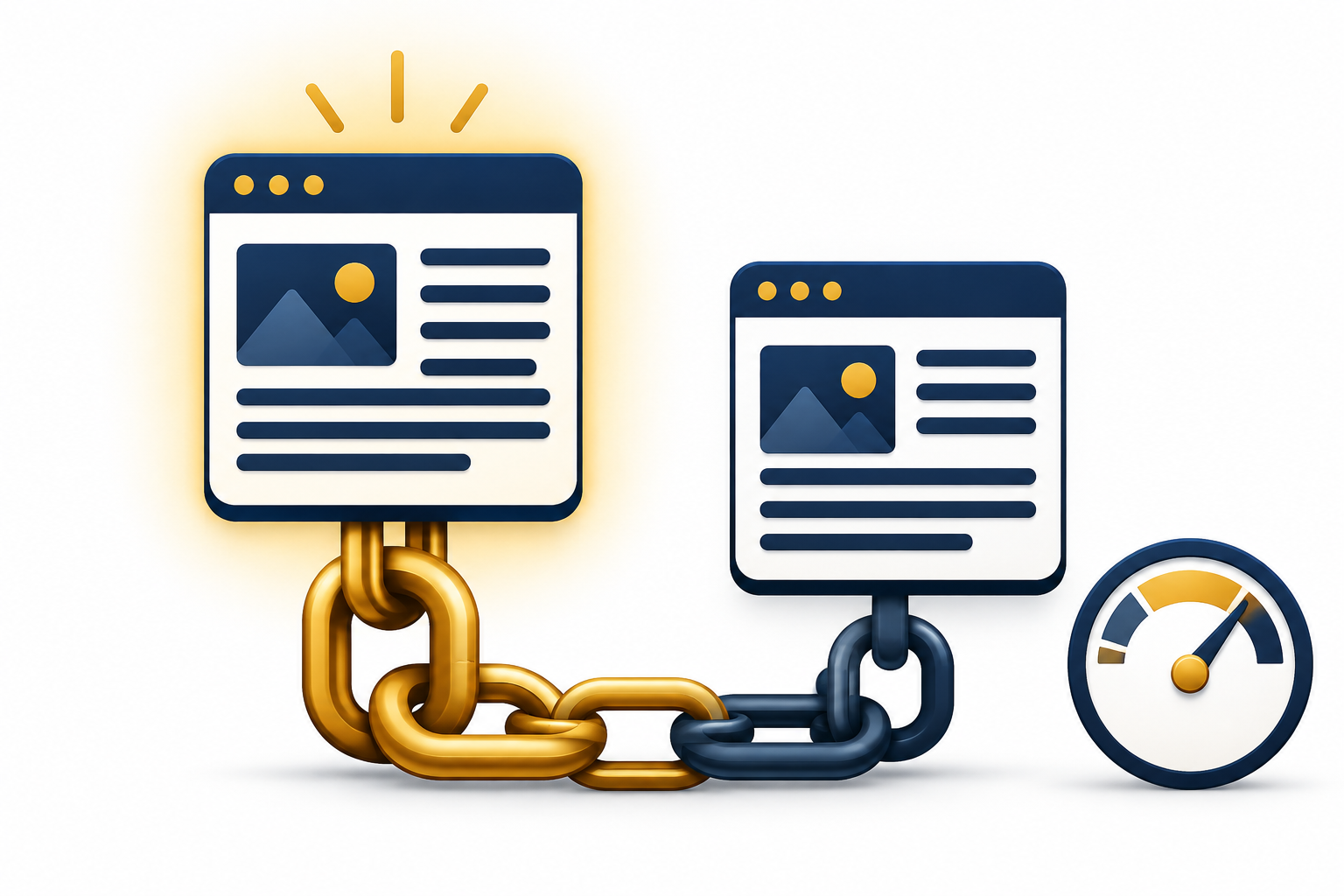
Current analysis puts a concrete number on this: for personal injury lawyers, an authority score in the 20 to 30 range is typically the minimum needed to rank on page one, varying by how competitive the specific local market is. This is a genuinely useful benchmark — a firm well below this threshold shouldn’t expect strong content and technical SEO alone to overcome the authority gap, regardless of how well-executed the rest of the site is.
What “Off-Page Being the Deciding Factor” Actually Means in Practice
For competitive practices, especially personal injury, off-page signals — meaning backlinks and the broader trust and authority they build — are usually the deciding factor once two competing firms have reached comparable on-page and technical quality. This is worth understanding precisely: link building isn’t the only thing that matters, but it’s frequently the tiebreaker once the baseline factors are roughly equal, which describes the actual competitive reality in most PI markets where every serious firm has invested in reasonably strong content and technical performance already.
This reframes the practical question a firm should ask. It’s rarely “should I invest in content or backlinks” — both are necessary — but rather “once my content and technical foundation are solid, is my backlink authority actually competitive with what’s currently ranking in my market.” For many firms stuck just below page one, the honest answer is no, and no amount of additional content investment closes that specific gap the way targeted, genuine link building does.
Why “Just Buy Links” Is Still the Wrong Instinct
Here’s where the nuance matters most. The same body of 2026 analysis that identifies backlinks as the deciding factor is equally direct on the other side: forget buying links from low-quality SEO vendors, since Google’s systems detect paid link schemes with high accuracy this year. This isn’t a contradiction — it’s the same principle running throughout this cluster in different forms. The authority a firm needs has to be genuine, earned authority, not manufactured volume, because search systems have become sophisticated enough to distinguish between the two, and a detected pattern of manipulative links actively undermines a firm’s standing rather than helping it.
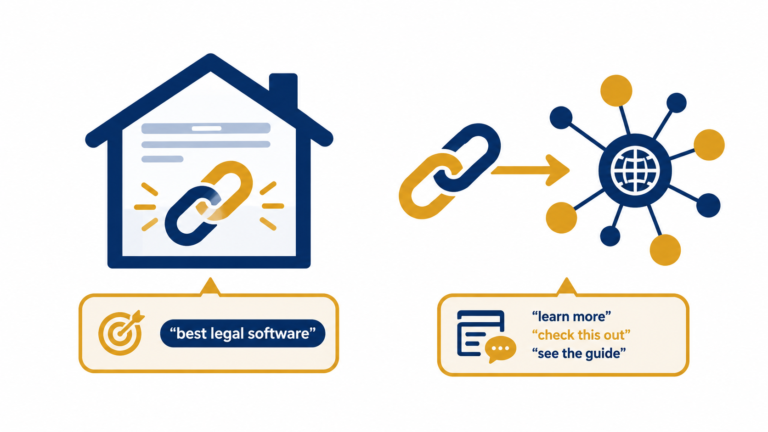
The practical guidance worth following: target publications with genuine readership, contribute substantive analysis rather than promotional filler, and include one natural, contextual link rather than forcing multiple exact-match commercial anchors into a single placement. This is consistent with the quality-over-volume principle relevant to legal link building broadly, but the competitive intensity of personal injury specifically raises the cost of getting this wrong — a firm burning budget on low-quality, detectable link schemes isn’t just wasting money, it’s actively working against the authority threshold it’s trying to reach.
Local Links Carry Outsized Weight for Personal Injury Specifically
Given how heavily personal injury search intent skews local — accident victims searching for representation in their specific city or region — local link sources deserve particular priority within a broader link building strategy. A feature in a city’s local newspaper or a local television station’s website carries serious authority and genuine relevance for local ranking specifically, in a way a generic national link often doesn’t replicate as effectively.
This connects directly to why proximity alone doesn’t determine local ranking outcomes — a firm’s overall “prominence,” built substantially through reviews and local backlinks, can actually override pure geographic distance in how Google’s local ranking systems evaluate competing firms. A firm slightly farther from a searcher’s location but with meaningfully stronger local authority signals can outrank a closer competitor with a weaker link and review profile.
How Link Building Interacts With Google Business Profile and Local Pack Visibility
It’s worth being clear that link building doesn’t operate in isolation from local SEO — the two reinforce each other directly. Current research identifies the city listed in a firm’s Google Business Profile as the single factor with the greatest impact on local pack rank, followed closely by accurate business category selection. Backlinks and citations work alongside these GBP-specific factors rather than replacing them, meaning a firm with strong link authority but a poorly optimized or inconsistent GBP profile is still leaving significant local visibility on the table.
This is why a complete personal injury SEO strategy treats link building as one component working in concert with GBP optimization, review generation, and consistent NAP citation data — not a standalone lever that compensates for gaps elsewhere.
What a Genuinely Strong Link Building Approach Looks Like for PI Specifically
Bringing this together into practical guidance: prioritize genuinely local, relevant sources — local news, community organizations, bar associations — over generic national link volume. Weight editorial and digital PR opportunities highly, since genuine local news coverage carries the kind of authority and relevance premium covered above. Apply real vetting to any guest post opportunity, checking traffic and outbound link quality rather than relying on domain metrics alone, consistent with the vetting principles relevant to any legal link building decision. And track authority score progress against the 20-30 benchmark specifically for your competitive market, using it as a genuine target rather than an abstract number, adjusting expectations based on how competitive your specific local market actually is.
A Worked Example: Diagnosing Why a Firm Is Stuck on Page Two
Making this concrete helps more than the principle alone. Consider a personal injury firm with genuinely strong content — detailed, well-written case-type pages, a fast, technically sound site, and a fully optimized Google Business Profile with consistent, accurate local citations. Despite all of this, the firm has been stuck at position 4-6 on page one, or occasionally slipping to the top of page two, for the target term “car accident lawyer” in its metro market for over a year.
Running a competitive authority comparison against the firms consistently outranking it reveals the actual gap: those firms carry authority scores in the mid-30s to low 40s, while this firm’s own authority score sits in the low-to-mid teens — meaningfully below even the conservative 20-30 benchmark covered above. Given everything else about the site is genuinely strong, this is a textbook case of the off-page deciding-factor dynamic in action: the firm has already maximized what content and technical investment alone can deliver, and the remaining gap is specifically a backlink authority problem, not a content or technical one.
The corrective path here isn’t more blog posts or another round of technical audits — it’s a deliberate, sustained local link building campaign specifically targeting the kind of genuine local news, bar association, and community sources covered throughout this guide, tracked against authority score progress toward the competitive range the firm’s actual competitors occupy.
Common Mistakes Firms Make Applying This Framework
Assuming a content or technical problem when the actual gap is authority. Firms sometimes respond to a ranking plateau by commissioning more content or running another technical audit, when a direct competitive authority comparison — as demonstrated in the worked example above — often reveals the real gap sits specifically in backlink authority, not the factors more commonly attributed to ranking struggles.
Treating the 20-30 authority benchmark as a fixed target regardless of local competition. This range is a reasonable general reference, but a firm in a genuinely low-competition market may find success well below it, while a firm in a saturated major metro may need meaningfully higher authority — checking what’s actually ranking in your specific market matters more than treating this benchmark as universal.
Pursuing link volume without local relevance weighting. Given how much more local sources matter for personal injury specifically compared to less geographically-driven practice areas, a firm pursuing generic national link volume without prioritizing local news, bar associations, and community sources is missing the relevance premium this guide has emphasized throughout.
Reacting to competitive pressure by considering cheap, bulk link purchases. This is precisely the instinct current 2026 detection capability has made most risky — a firm feeling pressure from the deciding-factor dynamic covered in this guide should feel that pressure toward genuine, sustained link building investment, not toward the shortcuts that now carry meaningfully more downside than they once did.
Why Crisis-Moment Search Intent Reinforces the Authority Premium
It’s worth understanding one more layer of why backlinks carry this much weight for personal injury specifically. Unlike transactional practice areas such as real estate or estate planning, personal injury prospects are frequently searching in genuine crisis moments — shortly after an accident, often in pain, under time pressure, and evaluating representation with real urgency. This search context reinforces why trust signals matter disproportionately: a prospect in this state is making a consequential decision quickly, often relying heavily on the credibility signals a firm’s search presence projects, including the kind of third-party validation genuine backlinks and local press coverage provide.
This connects directly to why generic, unearned authority doesn’t hold up the same way genuine authority does — a prospect in a genuine crisis moment benefits from being connected with firms that have real, earned local standing, and search systems evaluating trust signals for this specific type of high-stakes, urgent search behave accordingly, reinforcing the case for genuine over manufactured authority throughout this guide.
How This Fits Alongside the Rest of Your Link Building Strategy
Everything covered in this guide connects directly to tactics already established elsewhere in this cluster — the guest post vetting checklist, the anchor text ratio guidance, the toxic backlink framework — rather than introducing a separate, disconnected approach. The authority-score benchmark and deciding-factor framing in this guide are best understood as the strategic “why” underneath those tactical guides: understanding that backlinks are frequently the actual competitive tiebreaker is what makes the disciplined vetting, natural anchor text variation, and quality-over-volume principles covered throughout this cluster worth the sustained effort they require, rather than treating link building as a generic checklist item disconnected from what’s actually driving competitive outcomes in this specific market.
Frequently Asked Questions
What authority score should a personal injury firm target to realistically compete for page-one rankings?
A range of 20 to 30 is a reasonable general target, though the specific number that’s actually competitive varies significantly by how saturated your local market is — a firm in a smaller metro may find success below this range, while a firm competing in a major city may need meaningfully higher authority to break through.
Is content quality less important than backlinks for personal injury SEO?
No — content and technical quality remain necessary foundational requirements, not lower priorities. The point is that once a firm’s content and technical performance reach a reasonably strong baseline, which most serious competitors have already achieved in this saturated niche, backlink authority becomes the more common differentiator separating similarly-matched competitors.
How can a firm tell if buying links from a vendor crosses into the risky, detectable pattern current analysis warns against?
Warning signs include unusually low pricing relative to the domain authority claimed, bulk placement packages promising high volume quickly, and a lack of transparency about which specific sites are involved before payment — genuine, well-vetted placements typically involve real editorial review and don’t come with these characteristics.
Why do local news and TV station links carry more weight than a comparable-authority national site for personal injury firms specifically?
Because personal injury search intent is overwhelmingly local, a link from a source with genuine local relevance and readership reinforces exactly the kind of geographic authority signal that matters most for this practice area’s actual search behavior, beyond just the raw domain authority score a national site might carry.
Does improving Google Business Profile optimization reduce how much a firm needs to invest in backlinks?
Not directly — GBP optimization and link building address different, complementary ranking mechanisms. A firm can’t compensate for a weak backlink profile purely through GBP improvements, since off-page authority signals and local pack factors both contribute independently to overall visibility.
How long does it typically take to move a personal injury firm’s authority score into a competitive range through genuine link building?
This varies by starting point and the pace of link acquisition, but most firms should expect several months of consistent, genuine link building activity before seeing meaningful authority score movement, consistent with the broader timelines relevant to legal link building campaigns generally rather than expecting fast results from a handful of placements.
Should a personal injury firm prioritize link building over paid advertising given how expensive PI keyword CPCs have become?
Organic SEO, including genuine link building, becomes a financial necessity specifically because CPCs on competitive personal injury terms have grown so expensive that relying purely on paid acquisition creates an unsustainable cost structure over time, making the organic authority-building this guide describes a genuine long-term cost advantage rather than simply an alternative channel.
How does a firm determine what authority score its actual local competitors are working with?
Running a direct backlink and authority comparison using a standard SEO tool against the firms currently ranking above you for your target terms, as demonstrated in the worked example above, gives a far more accurate competitive benchmark than relying on the general 20-30 range alone, since your specific market’s actual competitive intensity determines what score is genuinely sufficient.
Is link building equally important for every personal injury case type, or does it matter more for some than others?
The underlying authority dynamic applies broadly across personal injury case types, though the most competitive, highest-CPC terms — car accident and truck accident claims specifically — tend to show the steepest authority requirements given how saturated competition is for these specific searches compared to lower-volume, more specialized case types.
What This Means for Where to Focus Limited Time and Budget
For a firm weighing where to direct limited marketing resources, this guide’s core finding offers a useful decision rule: if content and technical quality are already reasonably strong but rankings remain stuck, the highest-leverage next investment is very likely backlink authority specifically, not another round of content production or technical refinement. This doesn’t mean content and technical work stop mattering — they remain the necessary foundation everything else builds on — but once that foundation is genuinely solid, the evidence throughout this guide points consistently toward link building as where additional investment produces the most competitive movement in a market this saturated.
The Bottom Line
Personal injury lawyer SEO involves many moving parts, but current 2026 analysis is consistent on one point: once a firm’s content and technical foundation reach a competitive baseline, backlink authority is frequently the actual deciding factor separating page-one from page-two rankings. The authority score benchmark of 20-30 gives firms something concrete to target, but the path there matters as much as the destination — genuine, locally-relevant, well-vetted link building consistently outperforms the bulk-purchased link schemes Google’s systems now detect with high accuracy, meaning the firms winning this specific competitive dynamic are the ones building real authority deliberately, not the ones chasing a number through shortcuts that no longer work.