Local Link Building for Medical Malpractice Firms: Beyond the Generic Directory Listings
Generic local SEO advice for law firms stops at directories, chamber of commerce membership, and the occasional sponsorship. That advice isn’t wrong, but for medical malpractice specifically, it misses the single most distinctive local link building opportunity available to this practice area: condition-specific patient advocacy organizations that most firms never think to approach.
This guide covers what genuine local link building looks like for medical malpractice beyond the standard directory playbook, with particular focus on the patient advocacy and hospital-jurisdiction angles that don’t have a real equivalent in general personal injury practice.
Why Generic Local Link Building Advice Falls Short Here
Most local link building guidance treats every law firm’s local footprint the same way — claim directories, join the chamber, sponsor a youth sports team. These tactics remain necessary but generic, and none of them capture what makes medical malpractice’s local relevance genuinely different from a firm handling car accidents or slip-and-fall claims: this practice area intersects directly with patient communities organized specifically around the conditions and harms a medical malpractice firm actually handles.
Patient Advocacy Organizations: The Distinctive Local Link Opportunity
This is the core differentiator worth building an entire local strategy around. Condition-specific patient advocacy groups — organizations supporting cancer patients, birth injury families, surgical complication survivors, and medication harm victims — function as genuine community-level referral sources, and current lead generation guidance for this practice area specifically identifies them as a priority outreach category.
These organizations aren’t generic business contacts; they’re communities of people who have directly experienced the kind of harm a medical malpractice firm handles, often actively seeking legal information as part of navigating their situation. A genuine partnership — offering educational content, co-hosting an information session, or simply becoming a trusted, cited resource these organizations reference — produces a fundamentally different kind of local link than a chamber of commerce membership ever could, both in relevance and in the audience it actually reaches.
How to Approach Patient Advocacy Partnerships Without It Reading as Exploitative
Given the genuine vulnerability of the populations these organizations serve, approaching this opportunity requires real care, not just marketing efficiency. The right framing is educational and supportive first, commercial second — offering genuinely useful, accurate content about legal rights and processes after a specific type of medical harm, without pressuring the organization or its members toward retention.
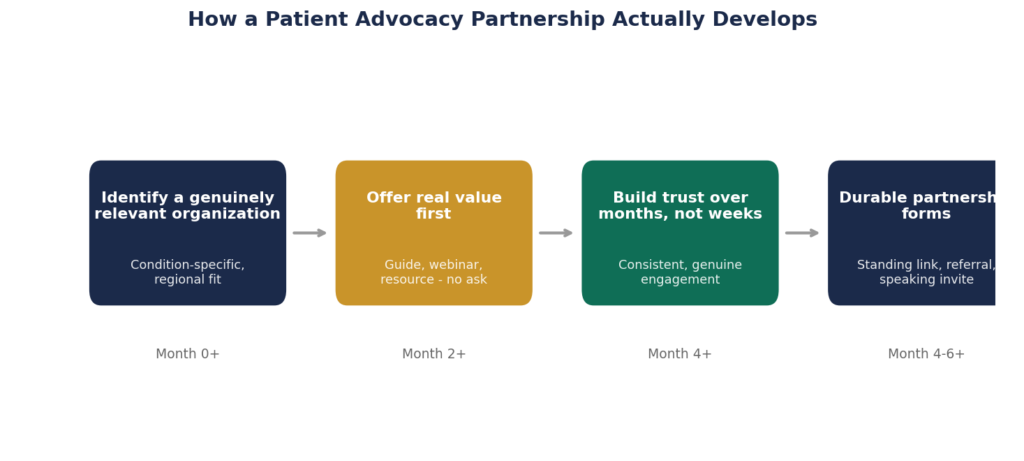
Practically, this means leading with value: sponsoring a resource guide the organization can distribute, offering a free educational webinar on legal rights after a specific condition-related harm, or providing genuinely useful content the organization’s own site can link to because it helps their members, not because of any expectation of referral. Organizations that see a firm consistently providing genuine value, rather than treating the partnership as a lead-generation channel first, are far more likely to maintain the relationship and provide the kind of durable, high-relevance local link this tactic can offer.
A Worked Example: What a Genuine Partnership Actually Looks Like
Making this concrete helps more than the principle alone. Consider a firm with genuine, established experience handling birth injury and cerebral palsy malpractice cases. Rather than cold-emailing a national birth injury advocacy organization with a generic partnership pitch, a more effective approach starts smaller and more specific: identifying a regional or state-level birth injury family support network, reviewing what kind of content and resources they currently share with members, and offering something genuinely useful that fills an actual gap — perhaps a plain-language guide explaining the legal timeline and process specific to birth injury claims in the firm’s state, something the organization’s own volunteers likely field questions about regularly but may not have professional-quality resources to point families toward.
If the organization finds this genuinely useful and links to it, or invites the firm to present at a support group meeting or contribute to a resource page, that’s a link and a relationship built on real value rather than a transactional ask. Over time, as the firm continues providing genuinely useful content and support without pushing for referrals, the relationship naturally deepens — sometimes into an ongoing resource partnership, sometimes into the organization independently choosing to recommend the firm to members who do need legal representation, which is a fundamentally different and more durable outcome than a paid or negotiated placement could produce.
What to Avoid When Approaching These Organizations
Leading with a request rather than an offer. An initial outreach message asking for a link or partnership before demonstrating any genuine value is far less likely to succeed than one that arrives with something useful already attached — a resource, a guide, an offer to present, something the organization can evaluate concretely rather than a request to take on faith.
Treating every advocacy organization as a lead-generation funnel. Organizations serving vulnerable populations are often attuned to outreach that feels transactional or exploitative, and a firm that treats this channel purely as a link-building tactic, without genuine investment in providing real value, risks damaging its reputation with exactly the community it’s trying to build trust within.
Approaching organizations with no genuine topical connection to the firm’s actual case experience. A firm without genuine birth injury case experience reaching out to a birth injury advocacy organization purely because the link opportunity looks attractive is both less likely to succeed and less able to provide the kind of genuinely useful, expert content this approach depends on.
Expecting fast results from what is fundamentally a relationship-building channel. As covered in the FAQ below, this approach typically takes months to mature into a genuine partnership — firms expecting the same turnaround as a paid guest post placement will likely abandon this channel before it has time to produce real value.
Hospital-System and Jurisdiction-Specific Local Structuring
Beyond patient advocacy partnerships, medical malpractice local SEO needs to account for something general local SEO advice doesn’t address: cases are often filed based on where the alleged harm occurred, which may be a specific hospital or health system rather than simply the client’s home city. A firm’s local content and link building should reflect this reality directly.
This means building content and pursuing local relevance around the specific hospital systems and health networks operating in a firm’s service area — not generically “local medical malpractice,” but content and community presence connected to the actual county courts and health systems where cases against those specific institutions would be filed. A firm that has handled cases against a specific regional hospital system benefits from local content and link building that reflects genuine familiarity with that system’s specific facilities and jurisdiction, rather than treating medical malpractice local SEO as interchangeable with any other practice area’s city-based approach.
A Closer Look at Hospital-System-Specific Content
Building genuine local relevance around specific hospital systems requires more than mentioning a hospital’s name on a practice area page. Genuine relevance comes from content that demonstrates real, specific understanding of a health system’s structure — which facilities within a regional system handle which types of care, which county courts typically hear cases against that system, and what the general litigation landscape has looked like for that specific institution where public record allows this kind of discussion.
A firm building this kind of content isn’t just optimizing for local search — it’s genuinely demonstrating the specific, institutional knowledge that a prospective client evaluating representation for a claim against a particular hospital system would find directly reassuring. This connects back to the broader E-E-A-T principle running throughout this cluster: genuine, specific expertise, demonstrated concretely rather than asserted generically, is what both search systems and real prospective clients are evaluating for.
Common Mistakes Firms Make With Medical Malpractice Local SEO
Treating local SEO as identical across every practice area a firm handles. A firm managing both medical malpractice and general personal injury sometimes applies the same generic local strategy to both, missing the patient advocacy and hospital-jurisdiction opportunities that are specifically available to medical malpractice and don’t have a direct equivalent in general PI local SEO.
Pursuing broad, generic health community involvement instead of condition-specific partnerships. Sponsoring a general community health fair carries some value, but it’s a meaningfully weaker version of the opportunity compared to a genuine, ongoing relationship with an organization specifically focused on the condition types a firm’s case-type content actually covers.
Underinvesting in the jurisdiction-specific research hospital-system content requires. This kind of content demands more genuine research and accuracy than a generic local practice area page, and firms that rush it — publishing surface-level content without the specific institutional detail covered above — miss much of the genuine differentiation value this approach offers.
Where Standard Local Link Building Still Applies, With Medical-Specific Adjustments
The foundational local tactics relevant to any legal practice area still matter here, adjusted for medical malpractice’s elevated standards. Bar association involvement remains valuable, with particular attention to any medical-legal committee or section a state or local bar association maintains specifically, since involvement there carries more topically relevant weight than general bar membership alone. Local press relationships benefit from a firm’s genuine expertise on medical error and patient safety topics specifically — local news outlets covering a hospital safety story or a notable local case are a natural, relevant local link opportunity distinct from generic press mentions.
Local sponsorships and community involvement remain worthwhile, though worth weighting toward health-adjacent community organizations — a local health fair, a patient safety awareness event, or a hospital system’s community outreach program — over generic youth sports sponsorships that carry less topical connection to this specific practice area.
How This Fits Alongside Advertising Compliance Requirements
Given the vulnerable population involved and the increasing regulatory attention on attorney advertising generally — including state-specific disclosure requirements that have expanded in several jurisdictions recently — any patient advocacy outreach and content should be reviewed against a firm’s specific state bar’s advertising and solicitation rules before publishing or distributing. Educational content offered without direct solicitation generally carries lower compliance risk than content or outreach that reads as a direct pitch for representation, reinforcing why the value-first framing covered throughout this guide matters as much for compliance as for genuine partnership success.
This is a genuine area where consulting with a firm’s own ethics counsel or compliance resource before launching a sustained patient advocacy outreach program is worth the upfront diligence, given how directly this channel intersects with rules specifically designed to protect vulnerable populations from inappropriate solicitation. A firm that gets this compliance review right upfront can pursue the genuine relationship-building this guide describes with real confidence, rather than having to walk back an outreach approach after the fact because it crossed a line neither the firm nor the advocacy organization anticipated.
Building a Repeatable Local Outreach Process Around This Strategy
Rather than treating patient advocacy outreach as a one-time project, a sustainable approach maintains an ongoing relationship-building cadence: identifying two or three genuinely relevant local or regional patient advocacy organizations per quarter, offering genuine value before any ask, and tracking which relationships develop into durable, ongoing partnerships versus which don’t progress beyond an initial contact.
This mirrors the broader principle relevant to local link building generally — recurring, genuine relationships tend to produce more durable, better-placed links than one-off transactional asks — but applies it specifically to the patient advocacy channel that makes medical malpractice’s local opportunity genuinely distinct from other legal practice areas.
Frequently Asked Questions
Are patient advocacy organization partnerships appropriate for every medical malpractice firm, or only larger firms with dedicated marketing resources?
Yes, this approach is accessible to firms of any size, since the core requirement is genuine relationship-building and useful content rather than a large marketing budget — a solo practitioner or small firm willing to invest attorney time in creating genuinely useful educational content can pursue this channel as effectively as a larger firm with dedicated marketing staff.
How does a firm identify which patient advocacy organizations are genuinely relevant to its specific practice focus?
Start with organizations focused specifically on the condition types the firm’s case-type content already covers — a firm with strong birth injury case experience should prioritize birth injury family support networks specifically, rather than pursuing broad, generic patient advocacy organizations with limited relevance to the firm’s actual practice concentration.
Is it ethically appropriate for a law firm to pursue links or partnerships with patient advocacy organizations given the vulnerability of their members?
Yes, provided the approach genuinely leads with educational value rather than lead generation, and respects the organization’s own standards and any relevant professional conduct rules around attorney outreach to potential clients. The distinction between exploitative outreach and genuine, value-first partnership is real and matters both ethically and for whether the partnership actually succeeds long-term.
How does hospital-system-specific local structuring differ from simply targeting a firm’s home city in local SEO?
Hospital-system-specific structuring accounts for the reality that medical malpractice cases are filed based on where the harm occurred, which may involve a hospital system, county court, or jurisdiction different from where the client or even the firm is physically located — a distinction general city-based local SEO for other practice areas doesn’t need to account for.
Should a firm publicly name specific hospital systems it has litigated against in its local content?
This requires careful judgment balancing legitimate marketing value against any relevant professional conduct rules and existing case confidentiality obligations — some firms do reference past matters against specific health systems where public record and ethical rules allow, since this can genuinely demonstrate relevant local expertise, but this should be reviewed against a firm’s specific jurisdiction’s advertising rules before publishing.
How long does it typically take for a patient advocacy partnership to develop into a genuine, durable local link relationship?
This varies considerably depending on the organization and the depth of genuine value provided, but a reasonable expectation is several months of consistent, genuine engagement before a partnership matures into a stable, ongoing relationship — this is not a fast-turnaround tactic and shouldn’t be pursued with short-term link acquisition timelines in mind.
Does this patient advocacy approach replace the need for standard directory and citation work covered elsewhere in this cluster?
No — patient advocacy partnerships are a genuine differentiator worth prioritizing specifically because they’re distinctive to this practice area, but they complement rather than replace the foundational directory, citation, and bar association work that remains necessary baseline infrastructure regardless of how strong a firm’s advocacy partnerships become.
Can a firm pursue patient advocacy partnerships at a national level, or should this always stay local and regional?
Both have a role depending on a firm’s practice scope — a firm handling cases across multiple states might reasonably pursue relationships with national advocacy organizations alongside regional ones, though the genuine, personal relationship-building this approach depends on tends to work more naturally at a regional or state level where a firm’s actual case experience and local jurisdiction knowledge are most directly relevant and credible.
How should a firm measure whether its patient advocacy outreach efforts are actually working?
Track genuine relationship progression rather than only counting resulting backlinks — how many organizations have engaged meaningfully with offered content, how many relationships have progressed to an ongoing basis (a standing resource link, a recurring speaking invitation), and separately, whether any resulting links or mentions show up in a standard backlink audit. Since this channel’s value extends beyond pure link acquisition into genuine community trust-building, backlink count alone understates its full value.
The Bottom Line
Local link building for medical malpractice firms genuinely differs from generic legal local SEO in one specific, underutilized way: condition-specific patient advocacy organizations offer a distinctive, high-relevance local partnership opportunity that most firms never pursue, while hospital-system and jurisdiction-specific structuring accounts for how these cases actually get filed in a way general city-based local SEO advice doesn’t address. Firms that build genuine, value-first relationships with patient advocacy communities, alongside the standard directory and bar association foundation, access a local link building channel that’s both more relevant and more difficult for competitors relying purely on generic tactics to replicate.