Link Building Mistakes for Medical Malpractice Firms: 8 to Avoid in 2026/27
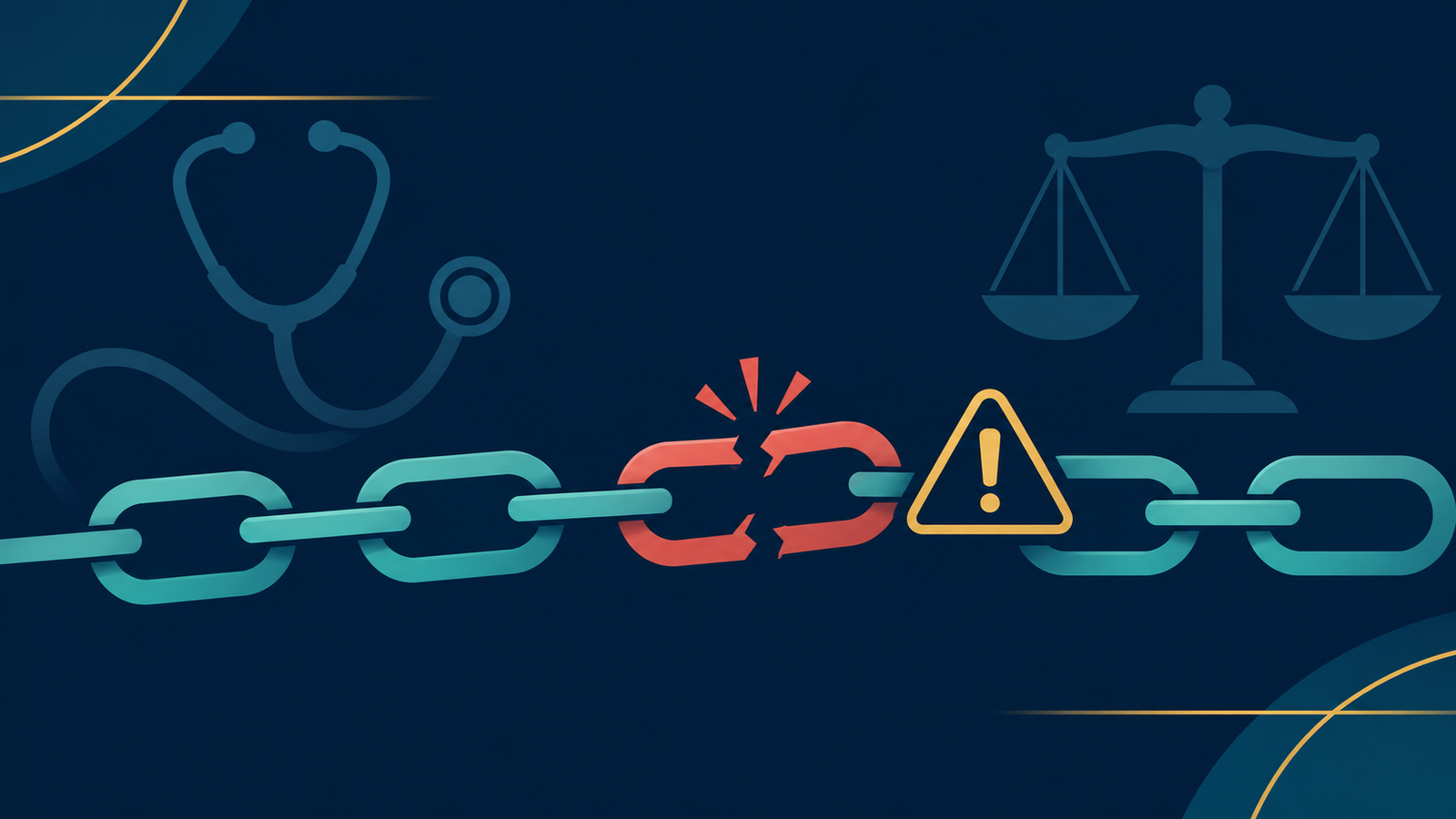
Most link building problems are not caused by link building itself. They come from a handful of repeatable mistakes: buying the wrong links, pointing them at the wrong pages, or judging results too early. In a category like medical malpractice, where search engines are cautious and the publishers worth appearing on are limited, those mistakes cost more than they do elsewhere.
This guide covers the eight we see most often, why each one hurts, and what to do instead.
1. Chasing link volume instead of relevance
The most common mistake is treating every link as equally valuable. A law firm marketing article makes the point that many firms get tripped up by assuming all links are good links, when the source of the link matters at least as much as the count (National Law Review).
For medical malpractice, relevance means sites about law, healthcare, patient safety or your local community, not general business blogs.
Do instead: Prefer a small number of relevant, editorially credible placements over a large batch of generic ones. Our guide on how many backlinks a medical malpractice firm needs helps you size the target.
2. Buying links from sites that publish anything
A site that accepts sponsored posts on any topic for a fee is not a credible publisher, and a link from it carries little value and some risk. One law firm marketing agency specifically warns against purchasing links, link exchanges and private blog networks, saying these tactics can lead to Google penalties (FWD Lawyer Marketing). Another UK source notes that unnatural link schemes can cause ranking drops that are hard to recover from, setting a firm back months or even years.
Do instead: Vet every publisher before you pay. Our walkthrough on auditing a medical-legal guest post site before buying gives you the checks.
3. Over-optimizing anchor text
Using the same commercial phrase, such as “medical malpractice lawyer,” as the anchor on every link looks manufactured. One law firm link building guide advises against micromanaging anchor text and overdoing keyword-rich anchors because it can backfire.
Do instead: Use a natural mix of branded, descriptive and partial-match anchors. We cover the ratios and examples in our guide to anchor text strategy for medical malpractice firms.
4. Sending every link to the homepage
A homepage link feels safe, but it leaves your case-type pages, such as surgical errors, misdiagnosis or birth injury, without the authority they need to rank for specific searches.
Do instead: Map links to pages. Decide which service or case-type pages matter most and direct a meaningful share of links to them, while keeping the profile natural.
5. Ignoring local and professional relevance
Many firms build links nationally and forget that legal searches are often local. A law firm link building guide points out that links from local news sites, chambers of commerce and community organizations can be extremely valuable for lawyers serving a specific area (The Blueprints). Professional sources such as bar associations and legal directories belong in the same bucket.
Do instead: Build a base of local and professional links first, then layer on topical placements in healthcare law and patient safety.
6. Using a generic provider with no legal or medical knowledge
Providers that build the same links for ecommerce, SaaS and law firms often produce content and placements that read as out of place in a YMYL category. Practitioners who work with law firms repeatedly make the point that legal link building needs legal relevance. We compare the two models in LegallyRank vs generalist providers.
Do instead: Ask providers who writes the content, who reviews it, and which publishers they will use before you sign.
Want placements chosen for medical malpractice specifically? See LegallyRank’s link building services.
7. Stopping too soon
Link building rarely shows results in the first month or two. Firms that cancel after a quarter often leave just before the effect begins to show, then conclude it did not work.
Do instead: Plan for at least six months and track leading indicators such as referring domains gained, impressions and branded search, not rankings alone. For a stage-by-stage view, see our guide on how long link building takes for medical malpractice firms.
8. Building links to a site that is not ready
Links amplify what is already there. If the target pages are thin, slow, poorly structured or lack clear expertise signals, new links have little to work with. A brand new domain has the extra problem of starting with no trust at all, which we cover in link building for a new medical malpractice firm website.
Do instead: Fix the foundation first, including technical health, service page quality and visible author and credential information, then build links to those pages.
A quick self-check
Before your next placement or renewal, ask:
- Can I see every publisher and why it is relevant?
- Are my anchors varied and natural?
- Do links go to the pages that need authority?
- Does my mix include local and professional sources?
- Am I measuring leading indicators and giving the campaign enough time?
- Are the pages receiving links ready to rank?
If the answer to any of these is no, that is where to start. For the full strategy, see our complete guide to link building for law firms.
Frequently Asked Questions
What are the most common link building mistakes for law firms?
The most common link building mistakes for law firms are chasing link volume over relevance, buying links from low-quality sites, over-optimizing anchor text, sending every link to the homepage and stopping the campaign too early.
Can bad backlinks hurt a medical malpractice website?
Bad backlinks can hurt a medical malpractice website when they come from spammy, irrelevant or paid-network sites, because unnatural link patterns can lead to ranking drops that take months to recover from. Vetting publishers before any placement reduces this risk.
Should every link use the firm’s main keyword as anchor text?
Not every link should use the firm’s main keyword as anchor text, because repeating the same commercial phrase looks unnatural. A mix of branded, descriptive and partial-match anchors is safer and more effective.
Is buying backlinks always a mistake?
Buying backlinks is risky when the links come from sites that publish anything for a fee or from link networks. Paid placements on relevant, editorially credible sites can be acceptable when handled transparently, which is why publisher vetting and disclosure matter.
How do I know if my link building is going wrong?
Link building is going wrong if you cannot see the publishers, anchors are repetitive, links all point to the homepage or the sites linking to you are unrelated to law and healthcare. A backlink audit will show these patterns quickly.
How long should I wait before judging link building results?
You should wait at least three to six months before judging link building results, because links take time to be discovered, evaluated and to affect rankings. Leading indicators such as referring domains and impressions show progress sooner.